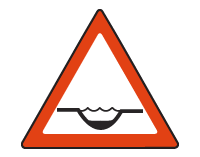
DRIFT AHEAD
Where:
On any road, particularly in rural or low-lying areas where rivers, streams, or drainage channels may cross the roadway.
Drifts are shallow depressions in the road that can become flooded during heavy rain or high water levels.
Purpose:
To warn drivers that there is a drift (dip) ahead where water may cover the road.
This can make the surface slippery, conceal hazards such as debris or deep holes, and potentially cause vehicles to stall or be swept away if the water is too deep.
To warn the driver that there is a drift (dip) ahead and that the road could be flooded especially in rainy weather.
Action:
Slow down as you approach the drift.
Assess the depth of the water before proceeding.
If the depth is unknown or appears unsafe, stop and wait for the water to recede or seek an alternative route.
If the drift is passable, drive slowly and steadily through the water, keeping control of the vehicle.
Avoid sudden acceleration, braking, or steering, as this can cause loss of control or splashing that may affect other vehicles.
Be alert for pedestrians, livestock, or other obstacles that may also be in the water.